01 Digital cluster + car OS
Project Gothenburg
65% complete
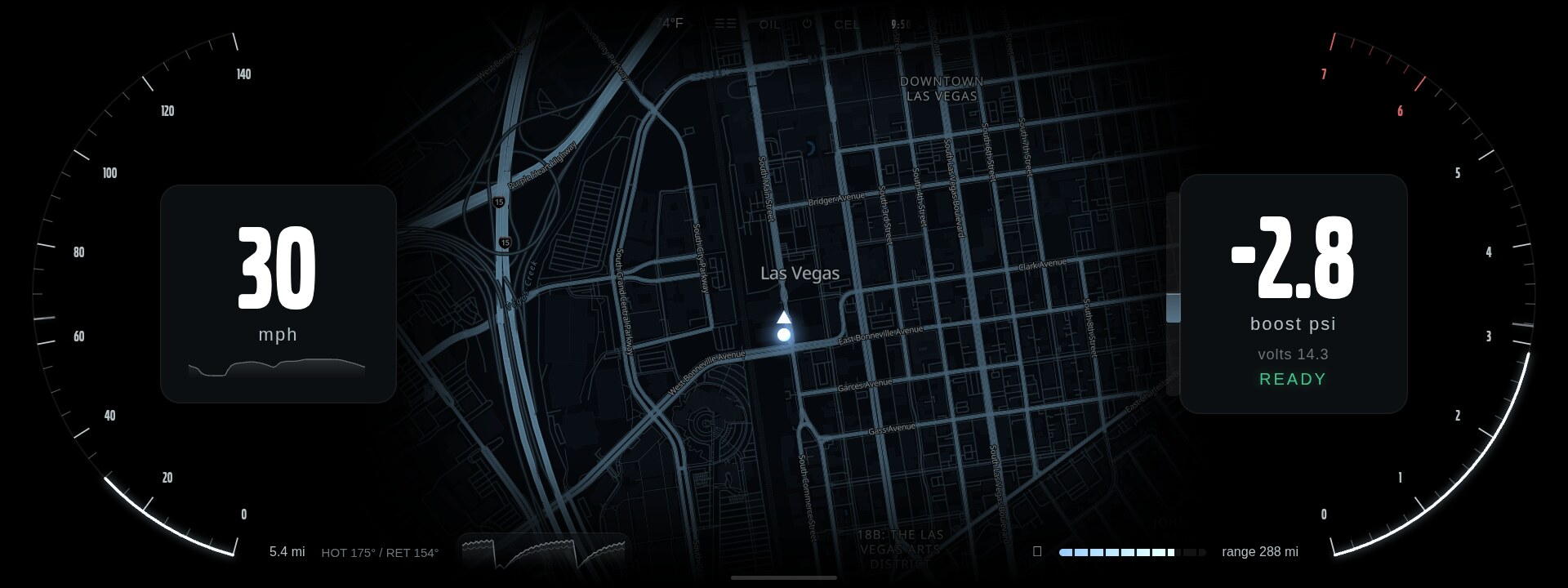
A modern Volvo-style digital driver display for a 1987 244 DL — a Raspberry Pi 5 driving a 12.3″ 1920×720 panel inside a 3D-printed cluster shell. The 240 has no factory CAN bus, so every reading is earned: each gauge is wired from a real sensor rather than decoded off a bus.
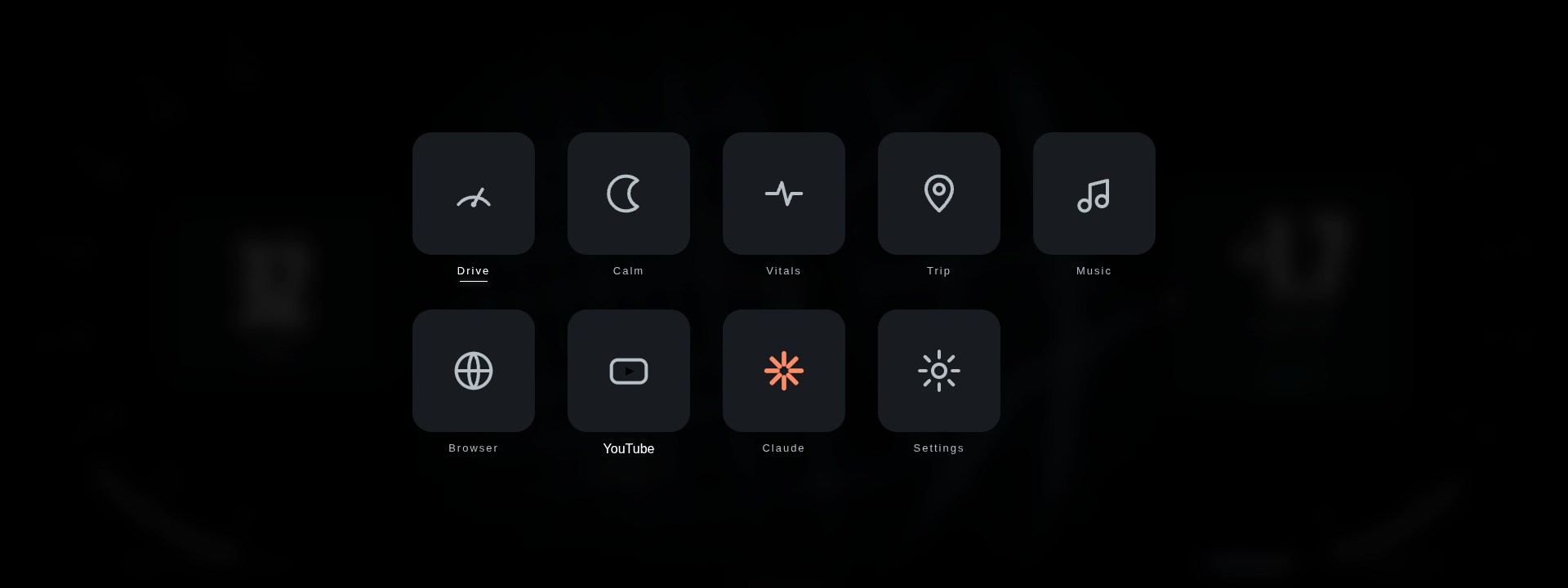

- Volvo-crisp gauge views rendered at panel-native 1920×720
- Fully offline MapLibre map — no signal required
- CarPlay-style app hub (Claude, browser, media)
- Boot splash and a safety motion lockout: above 1 mph the display falls back to speed only
A proper rear spoiler for the 240 — adapting the classic 850R wing to the 240's boot with a 3D-printed adapter bracket, plus a printed bumper cooling insert to finish the look. Designed to be sold: this is the first Volvo World part heading for a storefront at 240spoiler.com.
- 850R-to-240 spoiler adapter bracket, modelled parametrically and printed
- Matching 240 bumper cooling insert to complete the front-to-back look
- Being productised for sale — 240spoiler.com is ours and waiting
- Next step: a large filament batch (Alibaba) so we can print to sell
Several harnesses on the S60 are frayed. Rather than guess at part numbers from forum posts, the whole harness tree was pulled straight out of the factory parts catalogue and scoped to this exact car — engine, gearbox, steering hand and chassis number — then filtered down to what actually fits.
- Every harness section in the catalogue mapped for this VIN
- Applicability notes decoded: chassis breaks, factory codes, option splits
- Repair-level parts identified so a chafed loom can be mended instead of replaced
04 Live OBD + GNSS + IMU
S60 Telematics
85% complete
Custom firmware on a Freematics ONE+ streams OBD-II parameters, GNSS position and IMU motion off the S60 over WiFi into a private dashboard. Getting the GNSS receiver to talk took a hardware-level fix — the module needed the right RX pin at the right baud rate before it would say a word.
- Custom firmware — OBD + GNSS + IMU in one stream
- Pushes over a phone hotspot to a private endpoint
- DTC readout and trip history
- An OBD emulator on the bench so development doesn't need the car
Private tool — not publicly accessible. Written up here because the engineering is worth talking about, not because you can log into it.

Volvo's dealer workshop system stores its entire service library in a SQL database. Reading it directly instead of clicking through the application turned a three-and-a-half-minute lookup into a sub-second query — and made the whole library searchable at once.
- The full repair-document library, addressable by query
- Documents scoped to a specific VIN via its profile set
- Diagrams resolved and inlined, so a procedure renders as one self-contained page
- A request queue that can drive the original application when its exact printed output is needed
Private tool — not publicly accessible. Written up here because the engineering is worth talking about, not because you can log into it.

The parts catalogue's exploded diagrams are stored in a binary vector format that no standard tool would open — and the reason why turned out to be a trap: the files claim to be vector graphics, but the actual picture is a single bitonal raster tile hidden inside. Decoding the grid as one continuous strip produces convincing noise; finding the tile boundary produces a perfect diagram.
- 12,836 plates in the catalogue, none of them readable by off-the-shelf software
- Tile payload located at a fixed offset inside the element
- Rewrapped into a minimal single-strip container — then it opens perfectly
- Callout numbers in the plate tie straight back to part numbers
07 The junkyard advantage
YardBrain
80% complete
A private junkyard cross-referencing engine. Point it at a part and it works out every other vehicle that part was fitted to — so a trip to the yard stops being a guessing game. It reads the interchange data the pros use, flags cars that were filed under the wrong VIN, and scores which donor is worth the walk.
- Interchange cross-referencing — one part, every donor vehicle
- Detects vehicles misfiled under the wrong VIN
- A scoring matrix that ranks donors by what's actually worth pulling
- Original-equipment price lookups for comparison
Private tool — not publicly accessible. Written up here because the engineering is worth talking about, not because you can log into it.
08 Reconfiguring the car, not rewiring it
P3Config
40% complete
P3-platform Volvos ship with far more capability than any single car is configured to use. A great deal of it is switched on and off in the central electronic module's configuration rather than in hardware — which means features can be enabled by changing what the car believes about itself. Two tools do the work here: P3Tool and VDASH, both living on the workshop laptop next to VIDA.
- P3Tool and VDASH set up on the workshop laptop, alongside VIDA
- Already run against this exact S60 — a saved CarConfig export proves it
- Read, back up, and rewrite per-module configuration parameters
- Pairs with OEM retrofits: fit the factory part, then tell the car it exists
Private tool — not publicly accessible. Written up here because the engineering is worth talking about, not because you can log into it.